Casa NC
La intervención en Casa NC se centra en la transformación del área social de la vivienda, un espacio de gran escala definido por una cubierta inclinada de madera y una estructura metálica expuesta que le otorgan un fuerte carácter arquitectónico.
El proyecto surge a partir de la necesidad de reorganizar el living y el comedor mediante una propuesta integral de interiorismo, capaz de reforzar la identidad existente de la casa y, al mismo tiempo, construir una atmósfera contemporánea y cálida.
Desde el inicio, la estrategia de diseño se apoyó en el equilibrio entre materiales nobles y contrastes de textura, donde la madera, la piedra y el metal se convierten en los elementos principales de la composición.
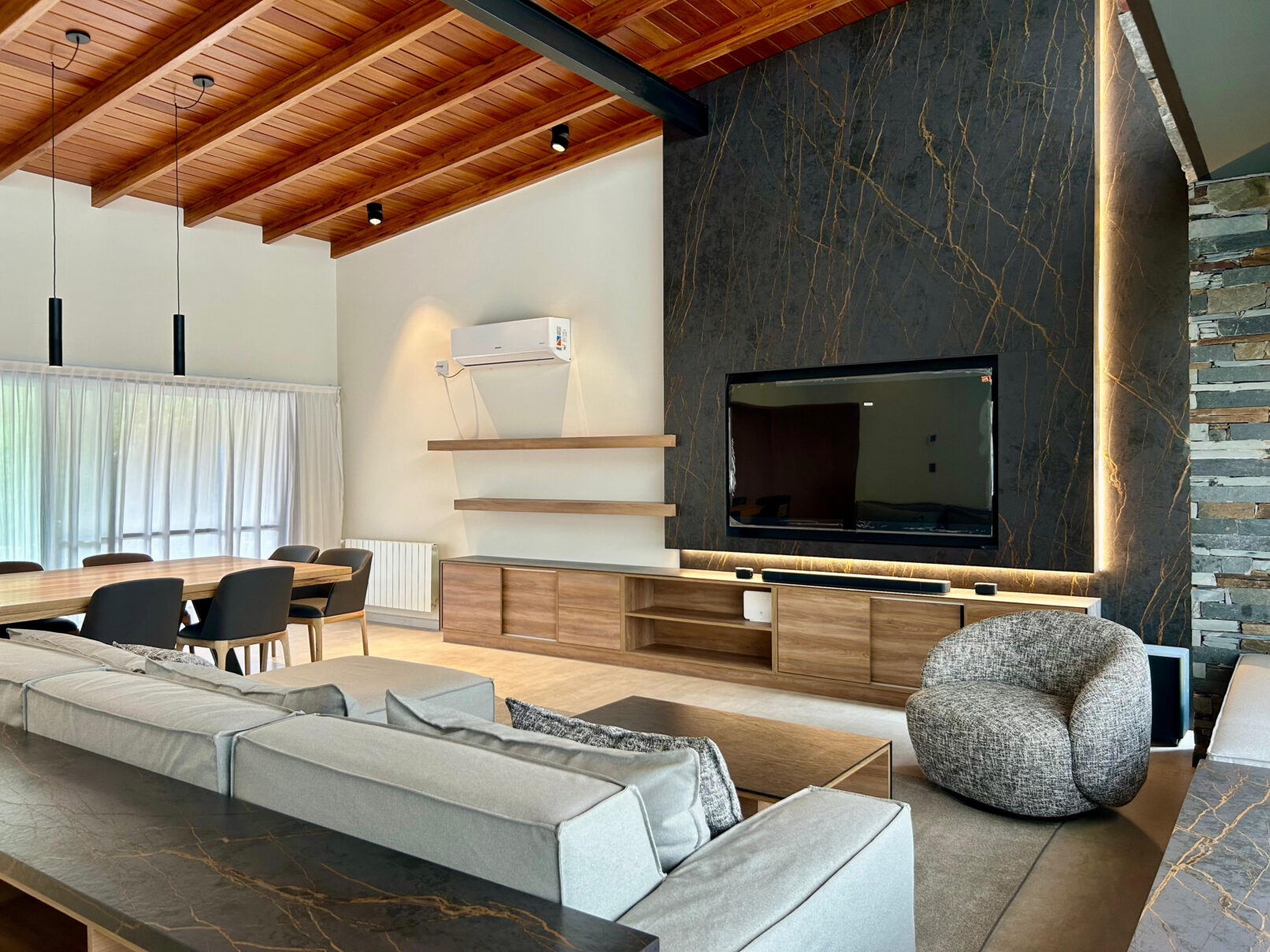
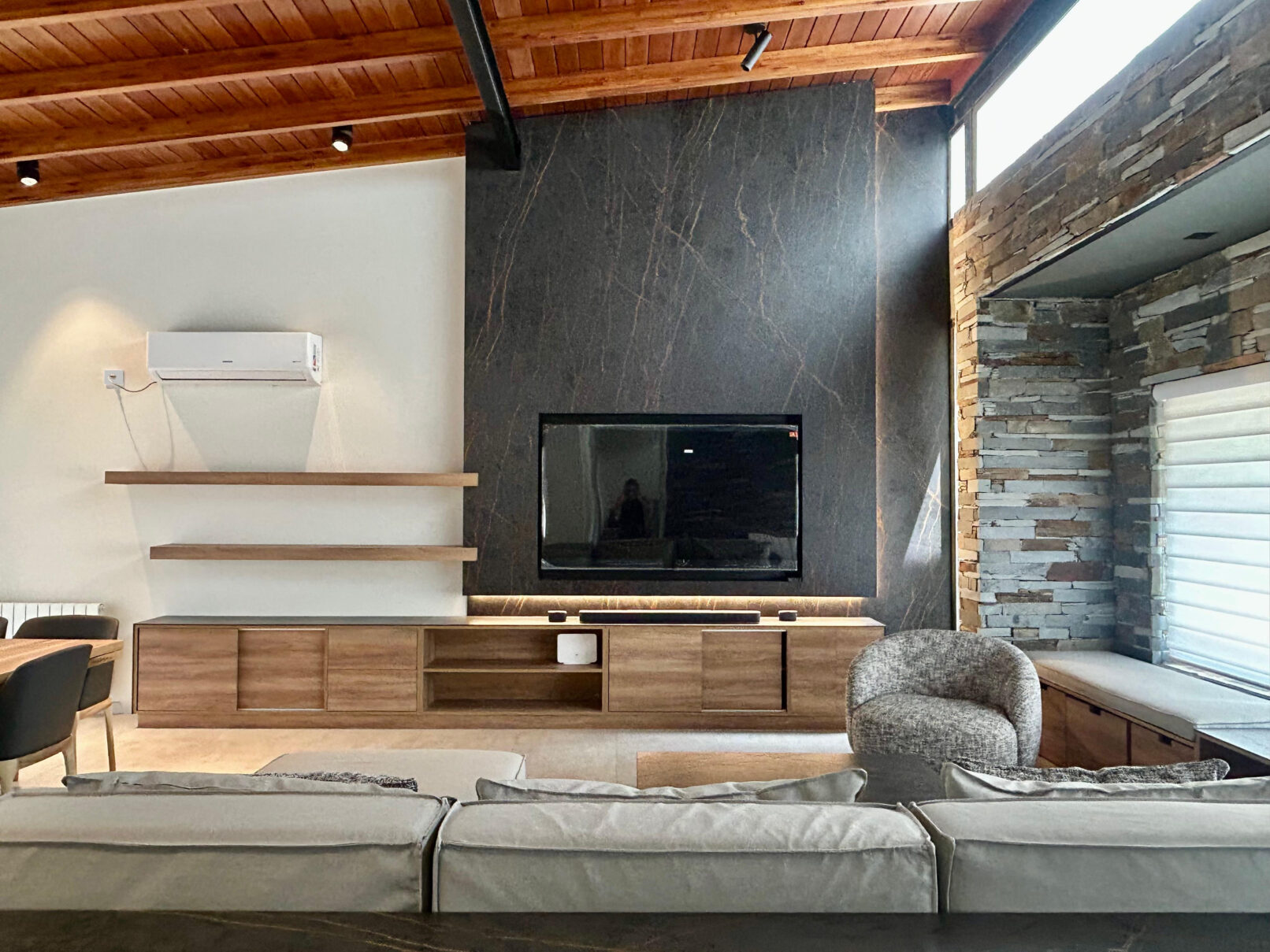
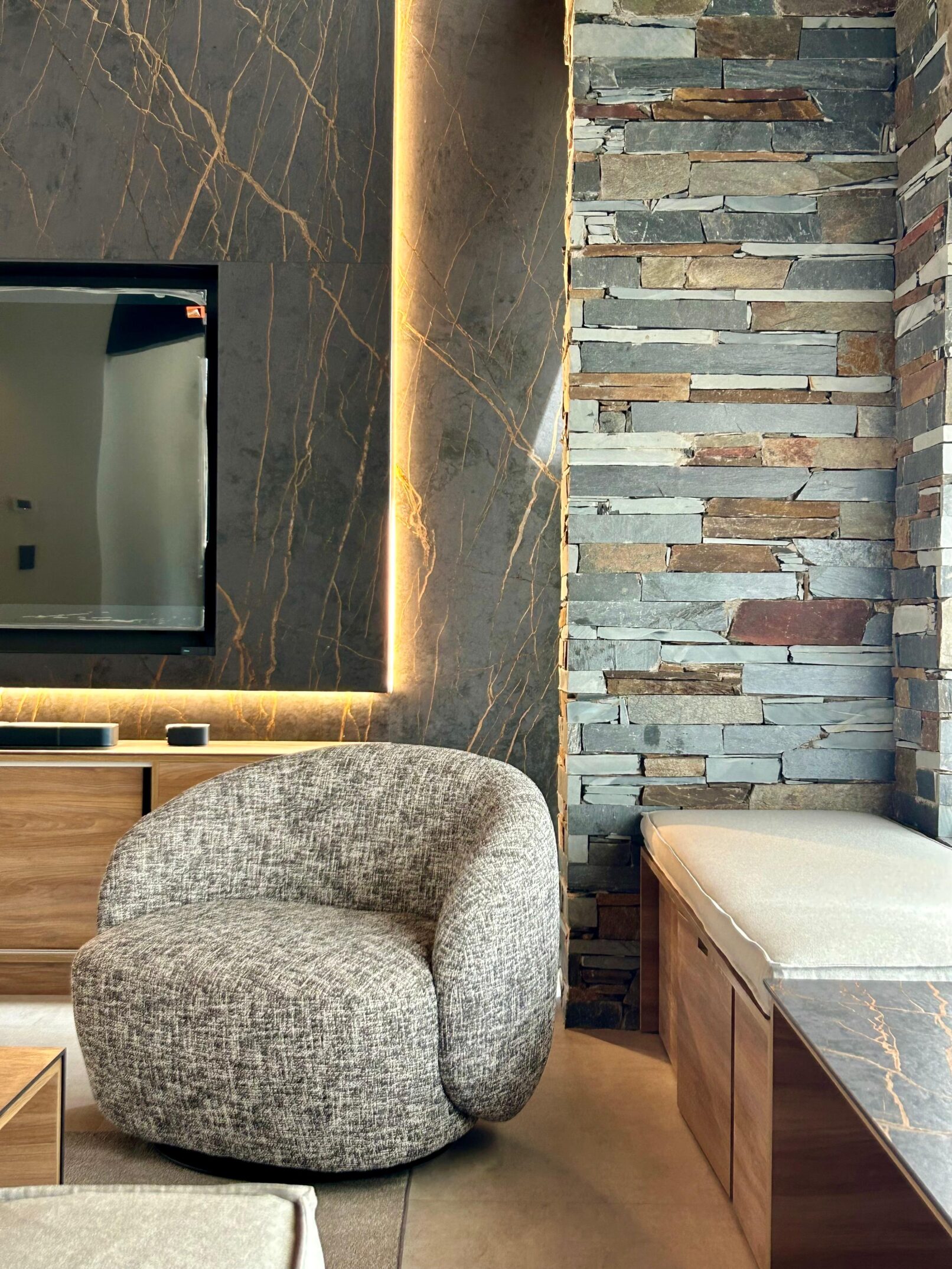
El corazón de la intervención es el mueble protagonista del living, revestido en dekton laurent con vetas en tonos cálidos. Este plano vertical organiza el espacio y funciona como soporte del mueble de televisión, integrando iluminación perimetral que enfatiza la textura del material y genera profundidad visual. Su presencia contrasta con la calidez del cielorraso de madera y con la materialidad pétrea de los muros existentes, estableciendo un diálogo entre lo rústico y lo contemporáneo.
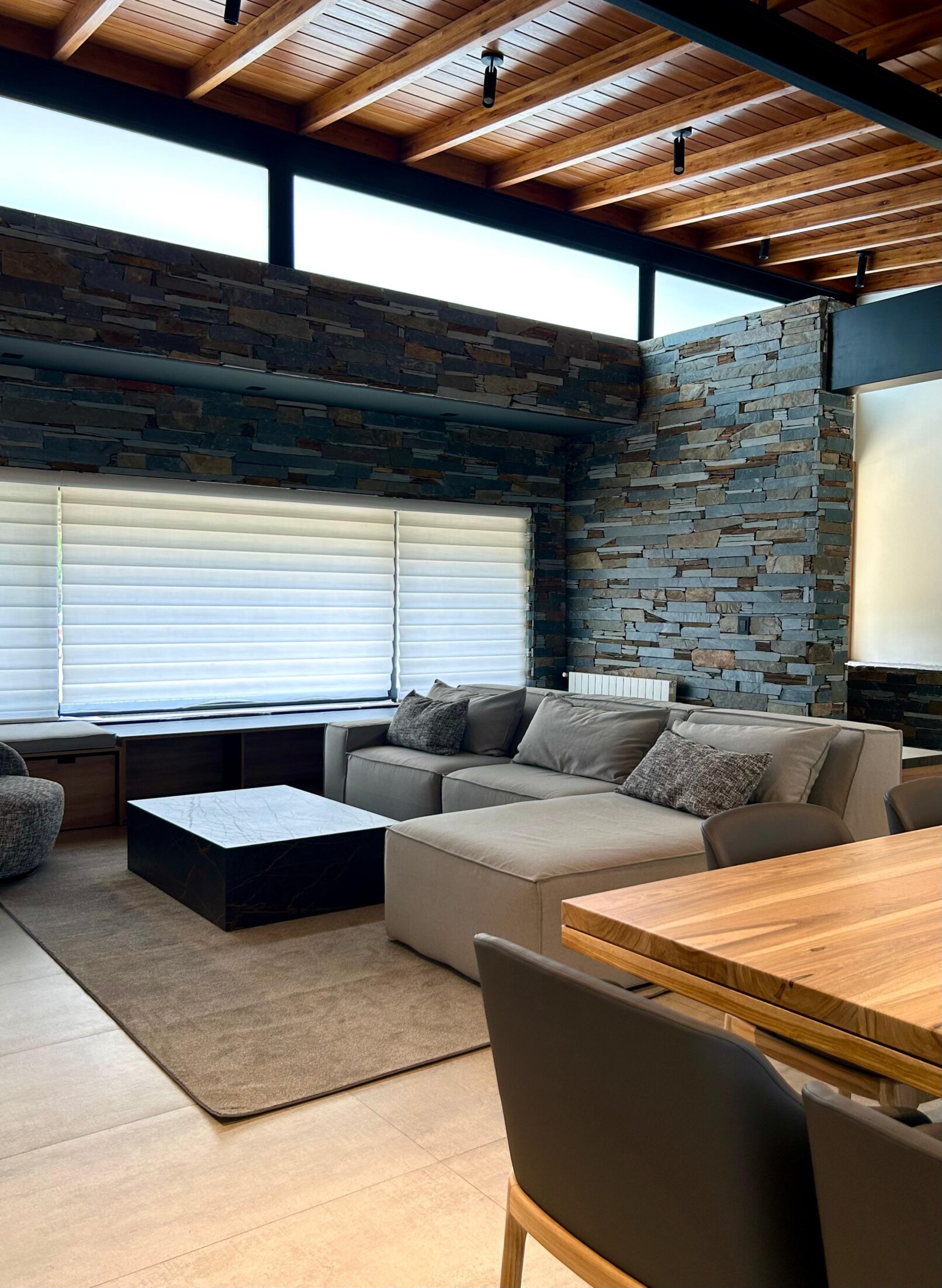
A partir de este gesto central, el proyecto organiza el resto del mobiliario mediante una serie de piezas diseñadas a medida que recorren el espacio de manera continua. Un mueble longitudinal bajo ventana, un módulo posterior al sofá y la mesa de centro construyen una línea horizontal que ordena el ambiente y aporta espacios de guardados sin interrumpir la lectura espacial.
La materialidad de estos elementos se resuelve mediante melamina en tonos madera y del mismo dekton, generando continuidad con el muro principal y reforzando la paleta de tonos tierra que define el proyecto.
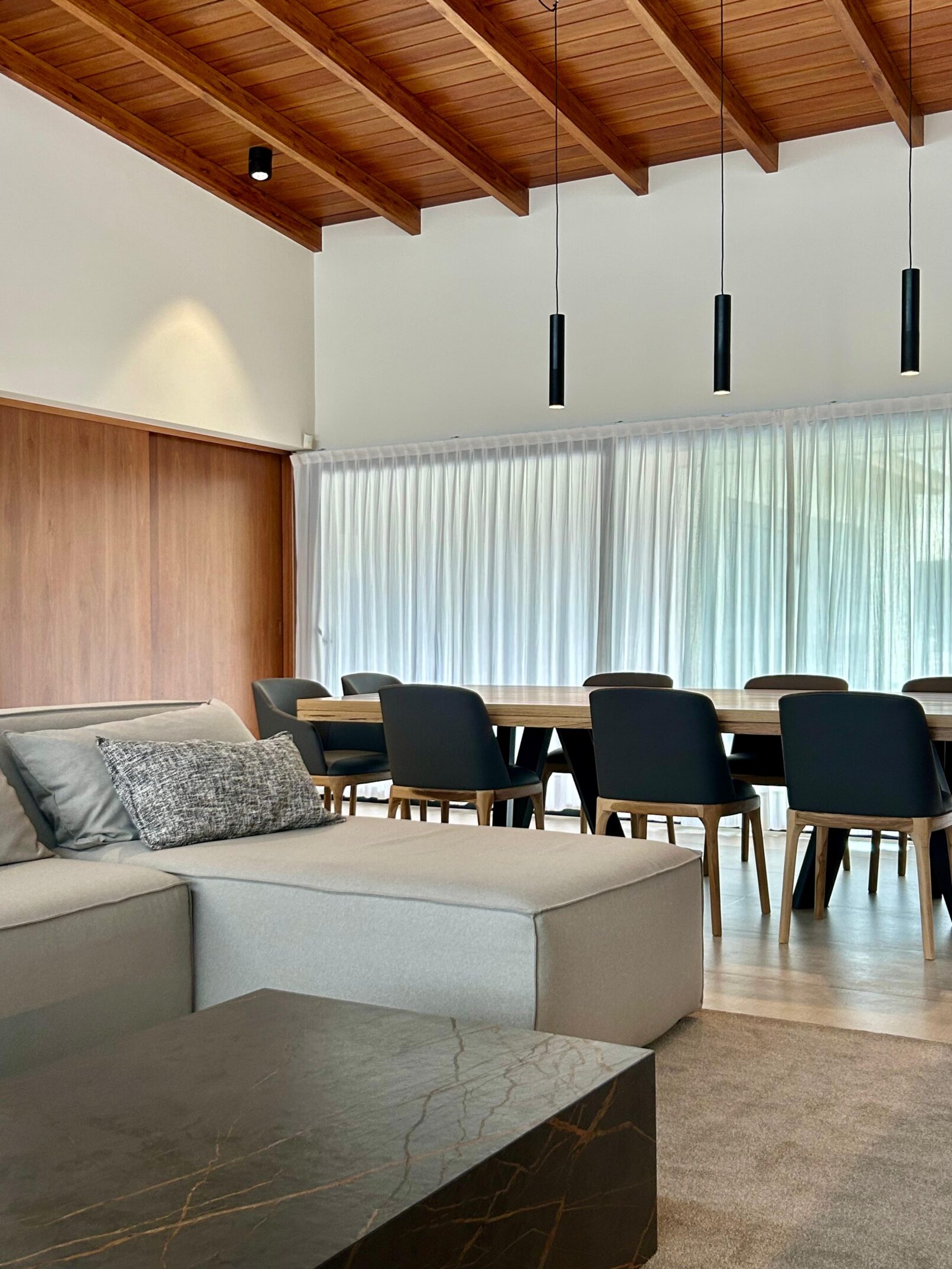
El sector del comedor se organiza alrededor de una mesa de madera maciza de tres metros de largo, concebida como el punto de encuentro de la vida cotidiana de la casa. Las luminarias colgantes lineales acompañan su eje longitudinal y aportan una iluminación puntual que enfatiza la escala del espacio.
La disposición del mobiliario permite mantener la continuidad visual entre living y comedor, mientras que la alfombra delimita el área de estar. La presencia de la piedra en los muros laterales y la estructura metálica de la cubierta refuerzan el carácter industrial de la vivienda, mientras que los textiles y las superficies de madera suavizan el conjunto.
La intervención busca así potenciar las cualidades espaciales preexistentes de la casa, consolidando un ambiente social cálido y contemporáneo donde los materiales, la iluminación y el mobiliario trabajan de manera integrada.
Más que introducir nuevos elementos, el proyecto se enfoca en ordenar y enfatizar la arquitectura existente, construyendo un espacio que equilibra robustez material, calidez doméstica y una estética contemporánea.
The intervention in Casa NC focuses on the transformation of the home’s social area—a large-scale space defined by a sloped wooden roof and an exposed steel structure that lend it a powerful architectural character.
The project arises from the need to reorganize the living and dining rooms through a comprehensive interior design proposal capable of reinforcing the home’s existing identity while creating a contemporary, warm atmosphere.
From the outset, the design strategy relied on a balance between noble materials and textural contrasts, where wood, stone, and metal become the primary elements of the composition.
The heart of the intervention is a feature unit in the living room, clad in Dekton Laurent with warm-toned veining. This vertical plane organizes the space and serves as the backdrop for the television unit, integrating perimeter lighting that emphasizes the material’s texture and generates visual depth. Its presence contrasts with the warmth of the wooden ceiling and the stone materiality of the existing walls, establishing a dialogue between the rustic and the contemporary.
Following this central gesture, the project organizes the rest of the furniture through a series of custom-designed pieces that flow continuously through the space. A longitudinal low unit beneath the window, a module behind the sofa, and a central coffee table create a horizontal line that orders the environment and provides storage without interrupting the spatial reading.
The materiality of these elements consists of wood-toned melamine and the same Dekton, generating continuity with the focal wall and reinforcing the earth-tone palette that defines the project.
The dining sector is organized around a three-meter-long solid wood table, conceived as the gathering point for daily life. Linear pendant lighting fixtures follow its longitudinal axis, providing focused illumination that emphasizes the scale of the space.
The furniture layout maintains visual continuity between the living and dining areas, while an area rug subtly delimits the lounge. The presence of stone on the lateral walls and the exposed steel structure of the roof reinforce the home’s industrial character, while textiles and wooden surfaces soften the overall composition.
The intervention seeks to enhance the home’s pre-existing spatial qualities, consolidating a warm and contemporary social environment where materials, lighting, and furniture work in an integrated manner. Rather than introducing disparate elements, the project focuses on ordering and emphasizing the existing architecture, building a space that balances material robustness, domestic warmth, and a contemporary aesthetic.